Sunday, September 9, 2012
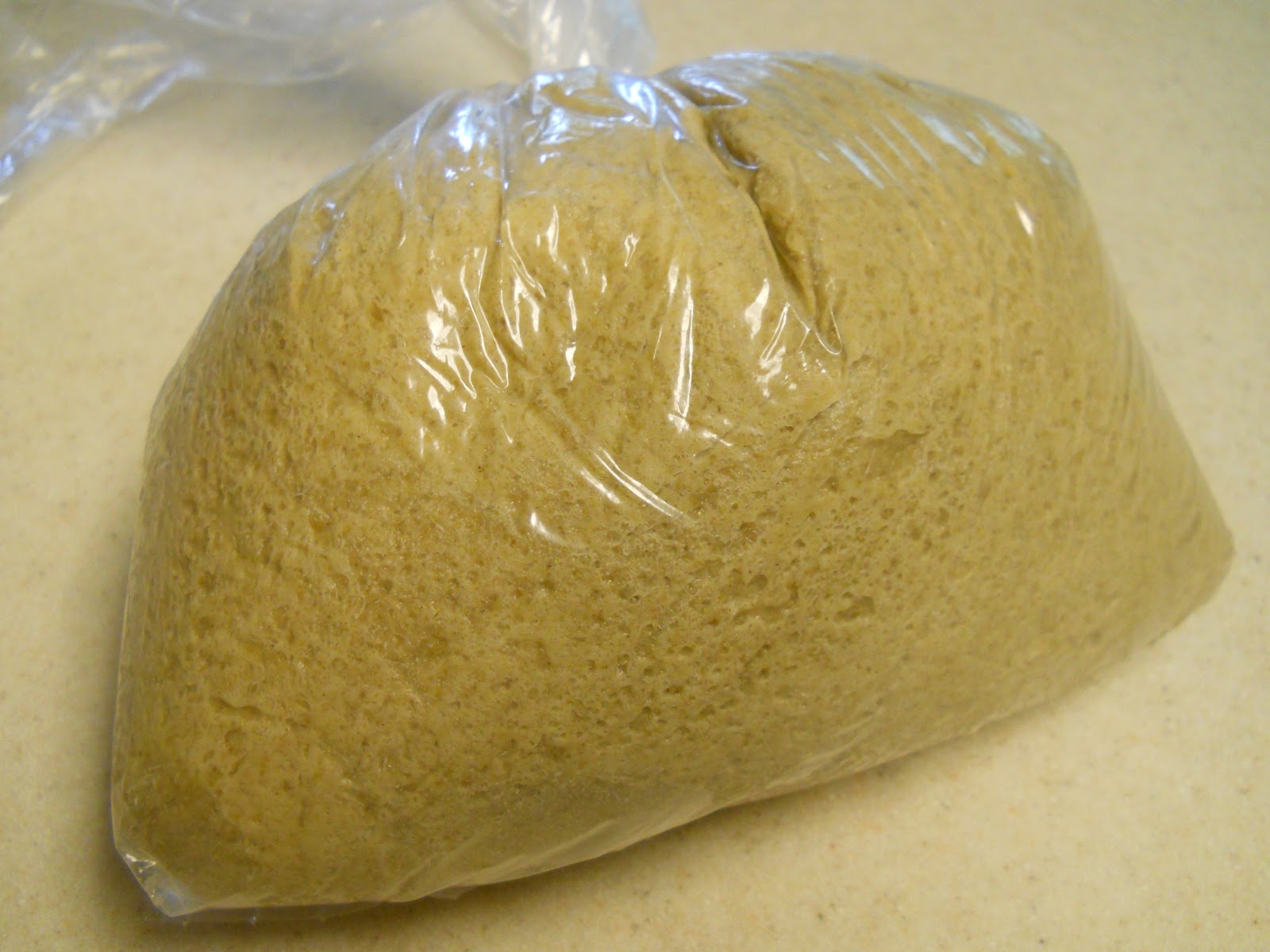
It's a matter of making Pita's....with Natural Leavening!
Wednesday, September 1, 2010
It's week #1 in September and we are focusing on.....Wheat and Grains
Hard red winter (HRW) wheat is the dominant class in the United States in acreage, production and use. HRW is used for bread, rolls and, to a lesser extent, sweet goods and all-purpose flour.
The flour from Soft Red Winter Wheat is used to make cakes, cookies, snack foods, crackers and pastries
Hard red spring (HRS) wheat has the highest protein level among the bread wheats. It is the premier bread wheat. HRS is often used to fortify hard red winter (HRW) flours for bread making. Bread-machine flours are generally made of a combination of HRS and HRW flours.
Durum wheats are the hardest and highest protein wheat grown in the United States. Durum wheat flours are used to produce semolina which is used to make pasta (spaghetti and similar noodle) products.
Hard white (HW) wheat is the newest class of wheat in the United States. Some can be used in place of hard red winter or hard red spring wheats for bread-making. These varieties can be thought of as hard red wheats with their bran color removed. Others can be used in place of high protein soft white wheats in noodle and snack food products.
Soft white (SW) wheat is used to make flour for bakery products other than bread such as cakes, crackers, cookies, pastries, quick breads, muffins, and snack foods. SW wheats tend to be low in protein (<10%) but higher protein levels (>11%) are desired for some products such as flat breads and noodles.
Do I have to only store and eat Wheat?
How do I store Wheat?
Store in an airtight container in a cool dry place
Store up off the floor so that air can circulate around the container, reducing the chance of condensation inside the buckets
Do not store wheat (grains) next to areas where there are strong odors, they can permeate through the container and cause the grain to take on the odor.
I personally use a liner in my buckets. This is precious cargo, and I want to protect it from pest infestation.
Where do I purchase Wheat?
In our area, you have many, many options. Here are just a few:
- Lehi Roller Mills
- Allison's Pantry
- Emergency Essentials
- Lindon Family Home Storage Center
- Macey's (particularly when they have their Food Storage Sales)
- Alpine Food Storage
- Five Star Preparedness
- Good Earth Natural Food Stores
- Aguason Farms (Formerly Blue Chip Group)
Saturday, March 14, 2009
It's a matter of ....choosing between purchasing Wheat versus Wheat Flour

"Does it take 5 gallons of wheat to make 5 gallons of wheat flour ground? I ask this because Macey's has wheat for $18.99 and wheat flour for $19.99/for 5 gallon buckets. So for one dollar more, I would not have to grind all that wheat. Should I look at it this way?"
Hopefully this information can help you make an informed decision about what you wish to purchase. Best wishes on your efforts to be prepared.
Tuesday, March 3, 2009
Wheat Prices ......way down
Last fall, we saw a tremendous increase in wheat prices, and many people were scrambling to find it where ever they could find it. This spring is a different story. See the chart below.
Now is a great time to buy wheat. But, as one member of our ward informed me on Sunday, Lehi Roller Mills (LRM) was out of wheat when he went to get some. LRM was out of wheat on and off last fall as were other retailers in our area. It is the basic law of supply and demand.There is a sense of heightened awareness regarding food storage staples right now. So, use due diligence and find it if you don't have it. Suppliers in our area to check are are:
- Allison's Pantry
- Lehi Roller Mills
- Macey (Look in the Preparedness "nook" or area)
- Emergency Essentials
- Walton Wheat (Alpine Food Storage is now placing an order with them every 2 weeks, see February posts for more information)
I would encourage you not to wait to purchase this important staple. See these 2 excerpts from the following sources:
Feb 4 - A lack of credit for seeds and fertilizers for farmers over the last six months could limit food production and trigger a new wave of price rises, Nestle Chairman Peter Brabeck-Letmathe has warned. The chairman of the world’s largest food company said: “Many farmers over the world didn't have access in October, November, and December for credits. They were limited in acquiring seed and acquiring fertilizer.” “It is probable that in 2009 we have a decline in production and we will have an increase in demand,” he said. “This will have another push on raw materials.” Some analysts fear plummeting food prices may prompt farmers to lower plantings and investment – leading to drop in crop production in 2009. (Flexnews 2/4/09)
Feb 4- The 400-mile Central Valley (in California) is many things: the world's largest agricultural area; the "salad bowl", where half of the country's vegetables are grown. But this year, with water shortages of a severity not seen for decades, many farmers and others are echoing the recent words of energy secretary Steven Chu: if current weather patterns continue, Californian agriculture could disappear. John "Dusty" Giacone, another fourth-generation Central Valley farmer, was forced to abandon his vegetable crop and divert his scarce water to save his 4,000 hectares of almond trees. “Taking water from a farmer is like taking a pipe from a plumber," Giacone told the Associated Press. "How do you conduct business?" (Dan Glaister in Los Angeles guardian.co.uk
One of the scriptures that we memorized for ward conference this year applies here:
"For behold, again I say unto you that if you will enter in by the way, and
receive the Holy Ghost, it will show unto you all things what you should
do" (2 Nephi 32:5)
Best wishes on your quest to be prepared.